


Conditional Attribute for Dokan – Control Product Fields by Category

Conditional Attribute for Dokan: The Ultimate Solution for Smart Category-Based Attribute Control in Multivendor Marketplaces
Running a successful Dokan multivendor marketplace requires more than just installing a plugin and hoping vendors figure out how to list their products correctly. The reality of managing a thriving e-commerce platform is that product data quality directly impacts everything from search engine visibility to customer conversion rates. Without proper guardrails in place, your marketplace can quickly devolve into a chaotic collection of incomplete, inconsistent, and irrelevant product listings. This is precisely where Conditional Attribute for Dokan enters the picture as a transformative solution for marketplace administrators who demand precision, consistency, and scalability.
Understanding the Core Challenge: Why Product Attribute Management Matters
Every marketplace owner eventually faces the same fundamental problem. When vendors open the product creation form in their Dokan frontend dashboard, they are typically presented with every single global attribute that has been configured in the WooCommerce system. For a small boutique marketplace with five or ten product categories, this might be manageable. However, as your platform grows and diversifies into multiple niches—electronics, fashion, home goods, digital products, and beyond—the attribute list becomes overwhelming.
Imagine a vendor who specializes in handmade leather wallets logging into their dashboard and being confronted with fields for “Screen Resolution,” “Battery Capacity,” “Processor Type,” and “Water Resistance Rating.” Not only are these fields completely irrelevant to their products, but their presence creates cognitive load, increases the likelihood of errors, and ultimately degrades the overall vendor experience. Vendors may abandon the listing process entirely, fill irrelevant fields with placeholder text just to get past the form, or simply choose to sell on a competing platform that offers a more streamlined experience.
The financial impact of poor product data extends far beyond vendor frustration. Search engines like Google rely on structured, consistent product information to generate rich snippets, power Google Shopping results, and determine relevance for organic search queries. When your marketplace contains products with incomplete or nonsensical attribute data, the entire catalog suffers in search visibility. Customers searching for specific product features cannot find what they need because the filtering and faceted search systems depend on accurate attribute completion. Conversion rates drop, return rates increase due to mismatched expectations, and your marketplace reputation erodes over time.
What Is Conditional Attribute for Dokan?
Conditional Attribute for Dokan is a purpose-built WordPress plugin engineered specifically to address these challenges through intelligent, category-based attribute filtering. Rather than displaying a static, one-size-fits-all product form to every vendor regardless of their niche, this plugin introduces a dynamic layer of logic that determines which WooCommerce global attributes should appear based on the product category selected by the vendor.
The underlying architecture is elegant in its simplicity yet powerful in execution. Marketplace administrators access a visual mapping interface directly within the WordPress admin panel. From this central control hub, you can define precise relationships between product categories and their relevant attributes. When a vendor navigates to the product creation or editing screen within their Dokan vendor dashboard, the form automatically adapts in real-time. Select “Smartphones” as the category, and fields for “Operating System,” “Screen Size,” “Camera Resolution,” and “Storage Capacity” appear seamlessly. Switch to “Men’s T-Shirts,” and those technology fields vanish, replaced by “Size,” “Color,” “Fabric Composition,” and “Fit Type.”
This contextual adaptation happens without page reloads, without confusing the vendor, and without requiring any training or documentation reading. The interface feels native to Dokan because it is native—built with the same design philosophy, coding standards, and user experience patterns that vendors already understand from their daily interactions with the platform.
The Technical Foundation: Built for WordPress and WooCommerce
One of the most compelling aspects of Conditional Attribute for Dokan is its deep integration with the existing WordPress and WooCommerce ecosystems. Unlike third-party SaaS solutions that require external API connections, ongoing subscription fees, and complex authentication flows, this plugin operates entirely within your self-hosted environment. It respects the WordPress coding standards, follows WooCommerce best practices for extending product data, and maintains full compatibility with the hooks, filters, and action patterns that developers expect.
The plugin leverages WooCommerce’s native global attribute taxonomy system, meaning you do not need to recreate or duplicate any existing attribute infrastructure. All your current color swatches, size charts, material options, and custom attribute fields remain exactly where they are. Conditional Attribute for Dokan simply adds a visibility control layer on top, determining which of these existing fields should render for which categories.
This architectural decision carries significant practical benefits. When WooCommerce releases a major update—as it does regularly to address security vulnerabilities, introduce new features, and improve performance—your attribute configuration remains intact. There is no fragile JavaScript overlay that breaks when WooCommerce changes its DOM structure. There is no external service dependency that fails during high-traffic sales events. The plugin functions as a natural extension of your core e-commerce stack, providing reliability that marketplace operators cannot afford to compromise.
Furthermore, because the solution is built for WordPress, it inherits the platform’s renowned flexibility. Multilingual marketplaces using WPML or Polylang can translate attribute labels while maintaining the same conditional logic. Performance-conscious administrators can leverage WordPress caching plugins without conflicts. Security-focused teams benefit from the plugin’s adherence to WordPress nonce verification, capability checks, and data sanitization protocols.
Why Your Marketplace Needs Conditional Attribute for Dokan
The decision to implement category-conditional attributes is not merely about convenience—it is a strategic investment in your marketplace’s long-term viability and growth potential. Consider the following dimensions of impact that Conditional Attribute for Dokan delivers:
Improved Product Data Quality Across Your Entire Catalog
When vendors only see attributes relevant to their specific product category, the likelihood of accurate completion increases dramatically. Human psychology research consistently demonstrates that decision fatigue sets in when individuals face too many choices or irrelevant options. By reducing the cognitive load of the product form, you effectively guide vendors toward providing better data without explicitly forcing them through rigid validation rules. The result is a catalog where product comparisons actually work, where faceted search filters return meaningful results, and where customers can trust the specifications they read.
Reduced Vendor Onboarding Time and Support Ticket Volume
Every marketplace operator knows that vendor onboarding is a critical bottleneck. The faster you can get sellers from registration to their first live product, the faster they generate revenue for themselves and commissions for your platform. When new vendors encounter a clean, context-aware product form rather than a sprawling mess of irrelevant fields, their confidence increases and their time-to-first-listing decreases proportionally. This efficiency translates directly into lower support costs—fewer tickets asking “What is this field for?” or “Do I need to fill this out?”—and higher vendor retention rates as sellers experience early success.
Enhanced Marketplace SEO and Organic Discovery
Search engine optimization for multivendor marketplaces operates on two levels: the platform-level SEO that drives traffic to your homepage and category pages, and the product-level SEO that ensures individual listings appear in relevant searches. Conditional Attribute for Dokan strengthens both. At the platform level, consistent attribute usage enables better internal linking structures, more accurate breadcrumb navigation, and richer category page content. At the product level, complete attribute data powers schema.org structured data markup, which Google uses to generate enhanced search results including price ranges, availability status, review stars, and product specifications directly in the search engine results page.
When customers search for “waterproof bluetooth speakers under $50,” Google can only surface your marketplace’s relevant products if the “Water Resistance” attribute has been properly completed. By making this field appear conditionally for the “Portable Audio” category—and hiding it from irrelevant categories—you increase the probability that vendors actually fill it out correctly.
Scalable Growth Without Administrative Overhead
As your marketplace expands into new product verticals, the administrative burden of maintaining data quality typically grows exponentially. Each new category introduces new attributes, new vendor training requirements, and new opportunities for data inconsistency. Conditional Attribute for Dokan inverts this relationship by making category expansion a matter of simple configuration rather than procedural complexity. Add a new category, map its attributes in the visual interface, and vendors immediately see the correct form fields. Your operations team spends minutes on configuration rather than hours on vendor education and data cleanup.
[IMAGE PLACEHOLDER: Before-and-after comparison showing a cluttered product form versus a clean, category-conditional form with only relevant fields visible]
Real-World Applications: Who Benefits Most?
While Conditional Attribute for Dokan provides value to virtually any multivendor marketplace, certain use cases demonstrate its impact most dramatically:
Electronics and Technology Marketplaces
Platforms selling smartphones, laptops, cameras, and accessories face some of the most complex attribute requirements in e-commerce. A single smartphone might require specifications for display technology, processor generation, RAM configuration, storage options, camera megapixels, battery capacity, charging speed, biometric features, network compatibility, and waterproof ratings. When these fields appear only for electronics categories, vendors in other departments are spared from this complexity while electronics sellers receive the granular control they need to compete with dedicated tech retailers.
Fashion and Apparel Platforms
Clothing marketplaces must manage size systems (US, UK, EU, numeric, alpha), color variations, fabric compositions, care instructions, fit types, seasonality, and style classifications. These attributes are meaningless for a vendor selling digital art prints or kitchen appliances. Conditional logic ensures that fashion vendors see sizing charts and material options while other sellers encounter their own relevant fields.
Home, Garden, and Furniture Marketplaces
Dimensional attributes—height, width, depth, weight—are critical for furniture and large home goods where shipping calculations depend on accurate measurements. These same fields would confuse a vendor selling lightweight jewelry or downloadable software. Category-conditional display keeps each vendor focused on the specifications that matter for their fulfillment reality.
Digital Products and Services
Marketplaces offering digital downloads, online courses, software licenses, or professional services have entirely different attribute needs than physical goods platforms. File format, license type, compatibility requirements, subscription duration, and support tier become the relevant fields. Conditional Attribute for Dokan ensures these digital-specific attributes do not clutter the experience for physical product vendors.
Hybrid and General-Purpose Marketplaces
Perhaps most importantly, marketplaces that span multiple verticals—think Amazon-style everything-stores or regional platforms serving diverse local businesses—benefit from conditional attributes as a unifying governance layer. Rather than maintaining separate vendor onboarding flows for each department, a single conditional configuration adapts the interface dynamically based on what each vendor actually sells.
How to Get Started with Conditional Attribute for Dokan
Implementing category-conditional attributes in your marketplace follows a straightforward process designed for administrators of all technical skill levels:
Step 1: Purchase and Install
Visit our official plugin page to review pricing tiers and select the license that matches your marketplace scale. We offer options ranging from single-site personal licenses to unlimited business authorizations for agencies and large networks. After purchase, download the plugin package and install it through your WordPress admin panel just like any standard plugin.
Step 2: Activate Your Authorization
The plugin includes a built-in Authorization Manager that handles license validation, domain registration, and automatic update delivery. Enter your authorization token in the dedicated dashboard page, and the system synchronizes with our licensing server to verify your purchase and activate your feature set. This process typically completes in under thirty seconds.
Step 3: Map Categories to Attributes
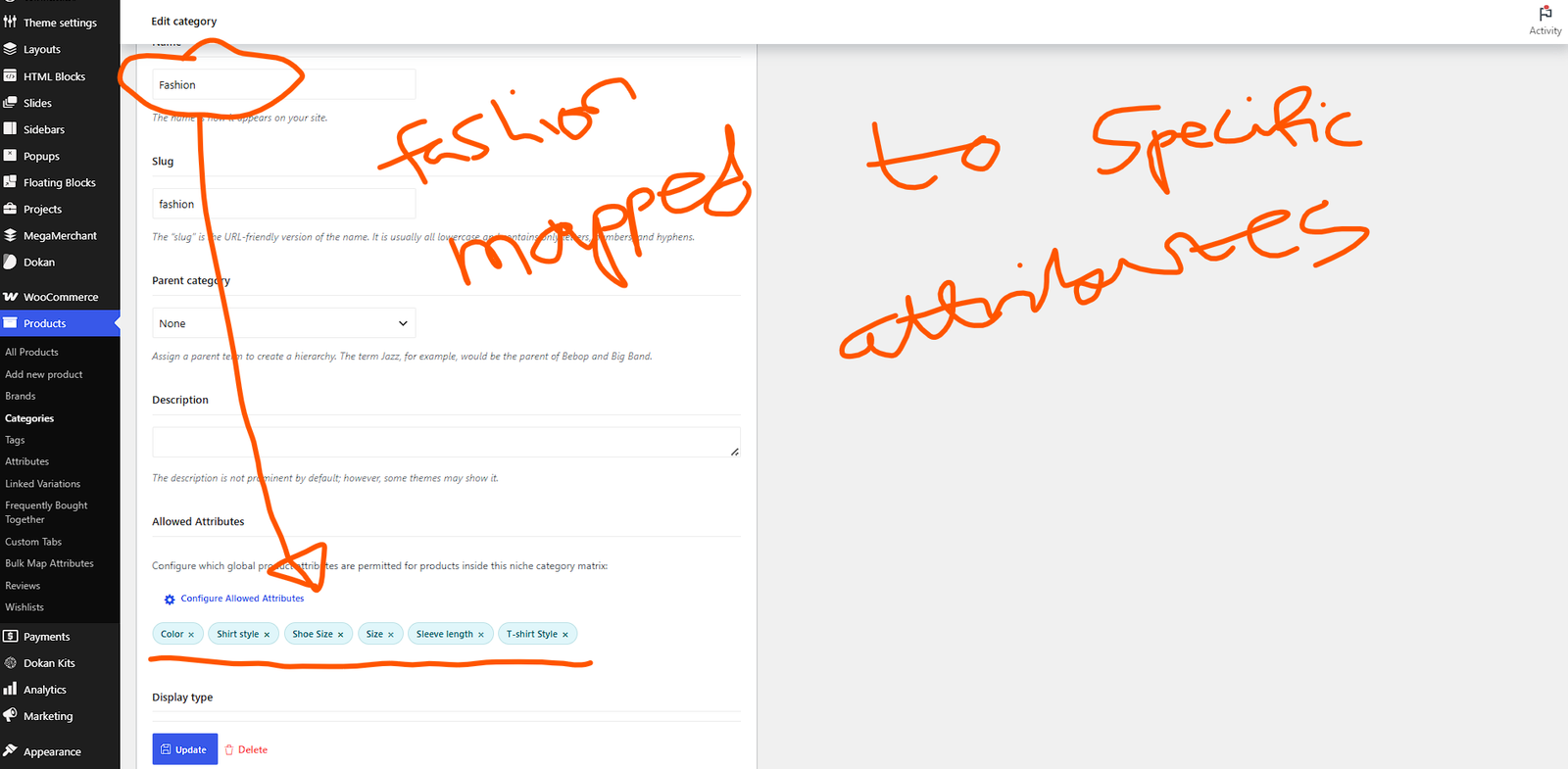
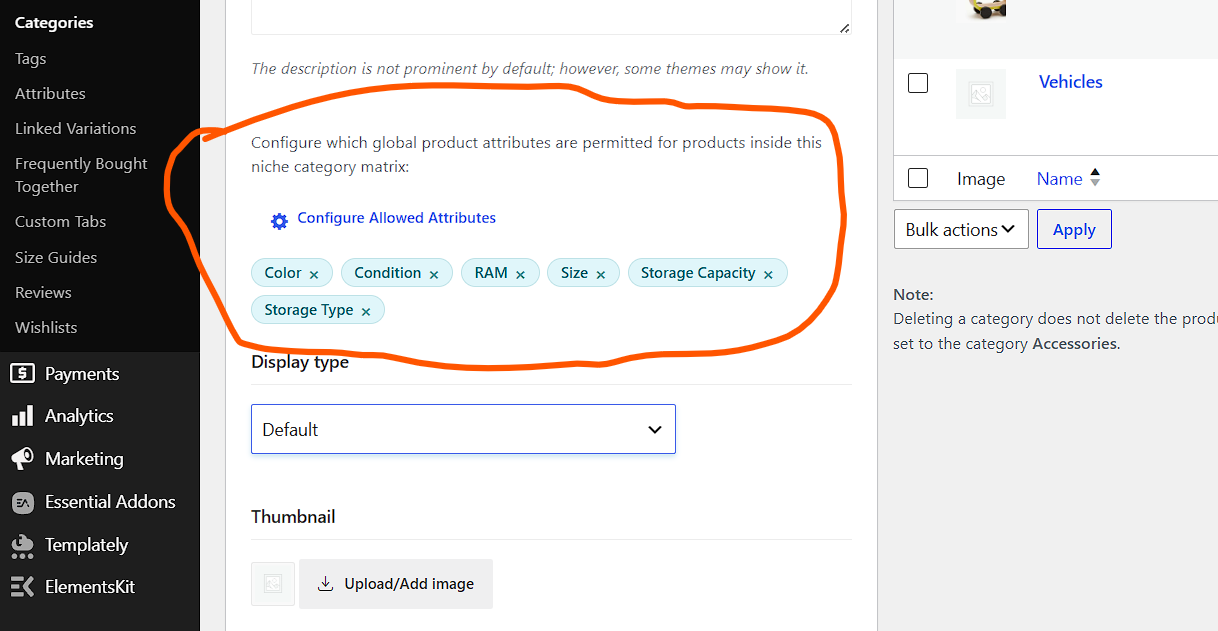
Navigate to the product category management section of your WordPress admin. For each category, you will now see an “Allowed Attributes” section powered by our visual mapping interface. Use the search functionality to quickly locate attributes, select relevant options using the checkbox tiles, and apply your configuration. The changes take effect immediately—vendors editing products in that category will see only the attributes you have specified.
Step 4: Monitor and Refine
As your marketplace evolves, your attribute mapping can evolve with it. Add new attributes to existing categories, create mappings for newly launched product verticals, or refine your configuration based on vendor feedback. The visual interface makes ongoing management as simple as the initial setup.
Commitment to Ongoing Excellence
The e-commerce landscape evolves constantly. WooCommerce releases major updates multiple times per year. The Dokan multivendor plugin introduces new features and dashboard improvements on a regular cadence. WordPress itself continues to advance its block editor, security frameworks, and performance capabilities. Conditional Attribute for Dokan is maintained with these realities in mind.
Our development team monitors compatibility with upstream releases, tests against beta versions before public availability, and delivers updates through the same automatic mechanism that powers WordPress core updates. Your marketplace benefits from new features, security patches, and performance improvements without requiring manual intervention or technical expertise.
Conclusion: Elevate Your Marketplace Experience
Conditional Attribute for Dokan represents more than a feature addition—it is a fundamental rethinking of how product data should flow through a multivendor ecosystem. By replacing static, overwhelming forms with intelligent, context-aware interfaces, you create an environment where vendors succeed, customers find what they need, and your platform grows sustainably.
The investment in conditional attribute logic pays dividends across every metric that matters: vendor satisfaction, product data quality, search engine visibility, customer conversion rates, and operational scalability. In a competitive marketplace landscape where user experience increasingly determines platform choice, this level of polish and precision can be the differentiator that attracts and retains your most valuable sellers.
Ready to transform how vendors interact with your product catalog? Explore our full feature documentation, view transparent pricing, and activate your license today at dokanconditionalattribute.com. Your marketplace—and your vendors—deserve a smarter way to manage product attributes.

